
Summer is here—and while we may dream of long, slow days filled with sunshine and play, the transition from the structure of school to the open-ended rhythm of summer can feel… well, anything but dreamy.
The shift from predictable days to looser schedules can leave kids, teens, and even adults feeling off balance. One day you’re celebrating the last school pickup, and the next, your home is filled with dysregulation, sibling tension, screen battles, and unpredictable energy.
If you’re feeling the shift, you’re not alone—and nothing is “wrong.” The brain is simply adjusting. What helps is returning to the foundation—the daily, brain-supportive habits that foster emotional regulation, connection, and fun.
Let’s talk about how to do just that—with intention, flexibility, and compassion.
Why Summer Can Disrupt Regulation (and What the Brain Needs to Recover)
During the school year, many families rely on built-in structure: wake-up time, meals, school, activities, bedtime. This rhythm acts like scaffolding for our nervous systems.
When summer arrives, that scaffolding can disappear overnight. Suddenly, we go from “what’s next” to “what now?”—and the body and brain feel the shift.
This uncertainty can increase stress, which may show up as big feelings, resistance, shutdowns, or clinginess. Not because anyone is misbehaving—but because the brain is working hard to adapt to the unknown.
Some children and teens—especially those who experience delays in emotional regulation or struggle with transitions—may need extra support and compassion during this time. And honestly? Many adults do too.
The good news? You don’t need a perfect schedule. What helps most is a sense of rhythm, connection, and safety that supports everyone’s brain and body.
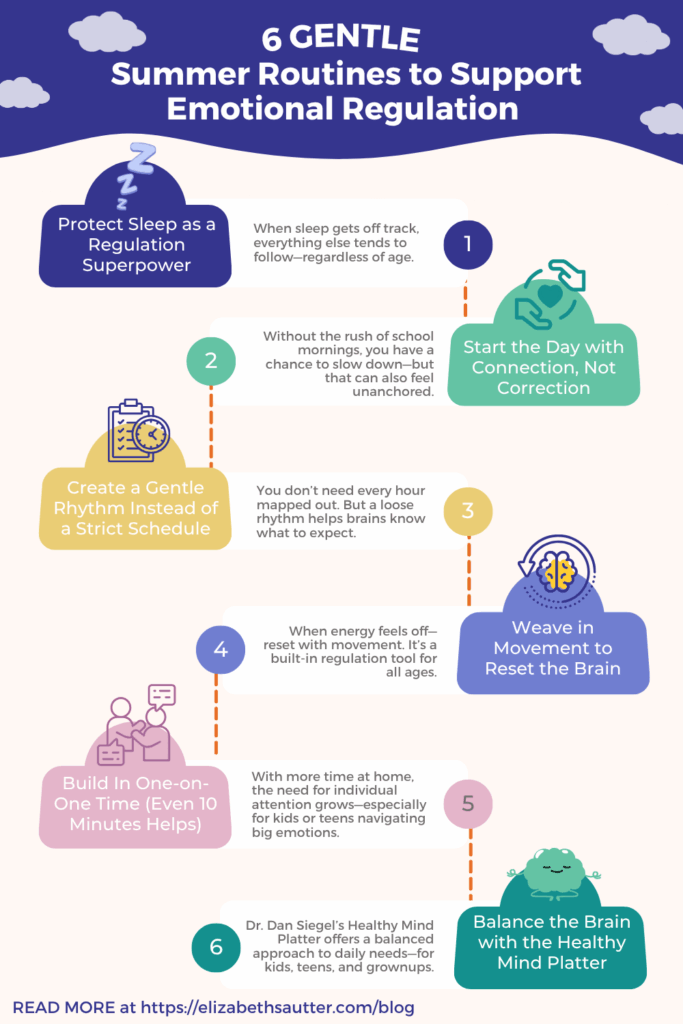
6 Gentle Summer Routines to Support Emotional Regulation
1. Protect Sleep as a Regulation Superpower
When sleep gets off track, everything else tends to follow—regardless of age.
Try:
- A consistent wind-down routine (bath → book → snuggle → sleep)
- A “bedtime menu” with 2–3 calming options
- Gentle cues like, “After we read, we’ll turn off the light and do our breathing.”
Sleep supports emotional regulation, resilience, and learning. Protect it like gold.
2. Start the Day with Connection, Not Correction
Without the rush of school mornings, you have a chance to slow down—but that can also feel unanchored.
Start the day with:
- A few minutes of presence (no phone, no rushing)
- A co-created plan: “What do you want today to feel like?”
- A soft launch: “Let’s move into the day together.”
It helps everyone’s nervous system shift from alert to attuned.
3. Create a Gentle Rhythm Instead of a Strict Schedule
You don’t need every hour mapped out. But a loose rhythm helps brains know what to expect.
Try something like:
- Morning: movement or outside time
- Midday: solo or creative play
- Afternoon: connection or outings
- Evening: calm and screen-free
This supports executive function without creating pressure.
4. Weave in Movement to Reset the Brain
When energy feels off—reset with movement. It’s a built-in regulation tool for all ages.
Ideas:
- Walks, scooter rides, or swinging
- Sprinkler play or stretching
- Dance breaks or driveway chalk
Movement doesn’t have to be structured. Just available.
5. Build In One-on-One Time (Even 10 Minutes Helps)
With more time at home, the need for individual attention grows—especially for kids or teens navigating big emotions.
Try:
- “I’m all yours for the next 10 minutes—what should we do?”
- Letting them lead a game or activity
- Quiet side-by-side time with no agenda
It’s not a task. It’s a signal of emotional safety.
6. Balance the Brain with the Healthy Mind Platter
Dr. Dan Siegel’s Healthy Mind Platter offers a balanced approach to daily needs—for kids, teens, and grownups.
Each day, consider:
- Play time
- Focus time
- Physical time
- Down time
- Connecting time
- Time in (mindfulness or reflection)
- Sleep time
You don’t need to check every box every day—just notice what’s there and what’s missing.
You Matter Too: Regulate With, Not Just For
You don’t have to keep everyone calm. You get to care for yourself too.
Try:
- A deep breath before responding
- A walk or warm drink to reset
- A simple mantra: “I can stay grounded, even if the day feels wobbly.”
When your nervous system feels safe, it becomes a steady anchor for your family. Presence matters more than perfection.
Final Thoughts: Let Summer Feel Simpler
Transitions don’t have to mean chaos. With gentle rhythms and compassionate presence, you can guide your family through summer with more ease.
Take the pressure off. Let go of packed schedules. Focus on what really supports emotional safety: sleep, connection, movement, and rest.
What your family needs most isn’t more stuff to do.
They need more of you—calm, connected, and present.
You’ve got this—and I’m right here with you.
💛 Want More Support This Summer?
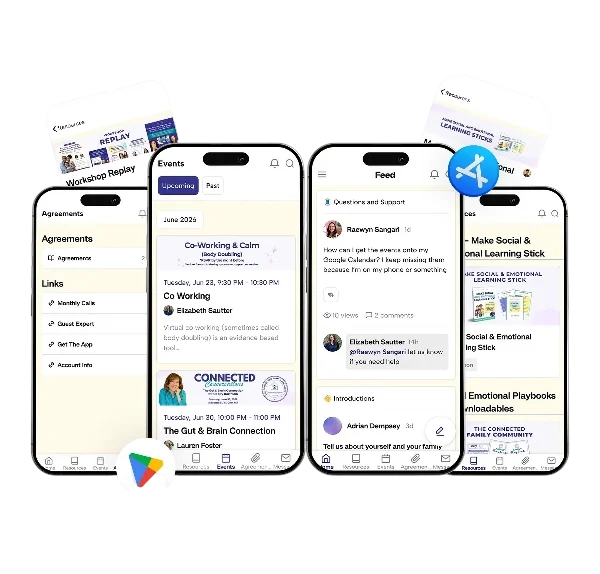
Inside The Connected Family Community, you’ll find practical tools, gentle rhythms, and conversations to help you navigate summer with more ease.
One of our featured resources includes a powerful expert talk on sleep and regulation, with strategies from Goldilocks Sleep Solutions with Patti Read and other specialists who focus on helping routines actually stick.
You’ll also get access to:
- Supportive workshops and replays
- Downloadable tools for rhythms, routines, and co-regulation
- Real-time Q&A and insight from professionals and fellow parents
- A warm, welcoming community that understands the ups and downs of everyday life
If you’re craving more calm, connection, and support—you’re warmly invited to join us. Click here to learn more