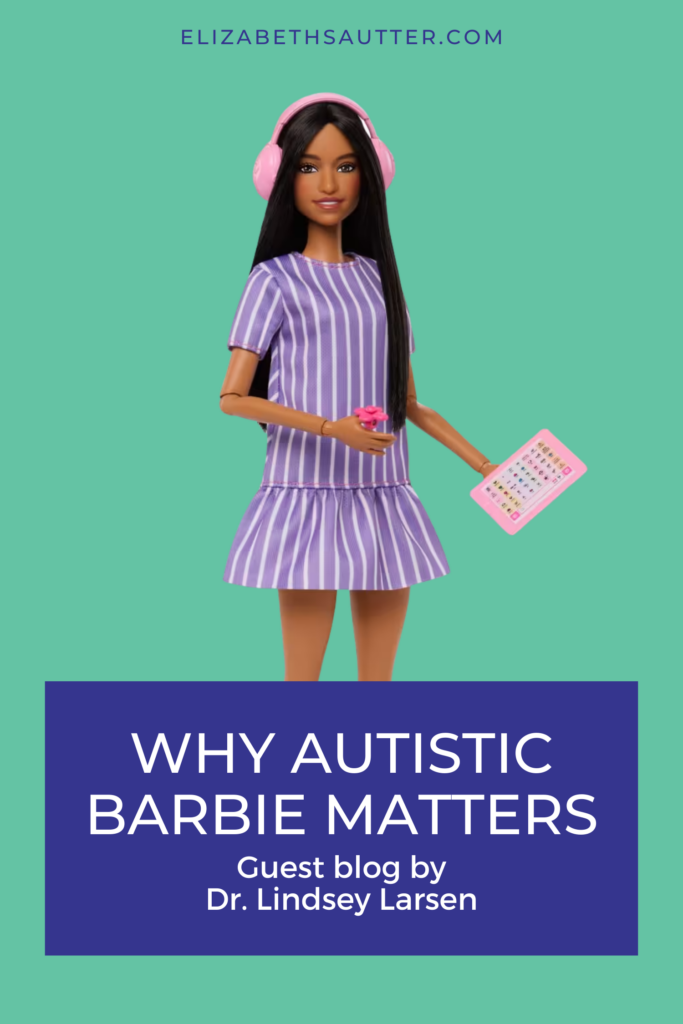
Autistic Barbie is a beautiful representation of an autistic person, but she is not meant to represent every autistic person. Like a character in a book, she is one individual autistic person in Barbieland, not a universal depiction of the entire spectrum.
This kind of visibility matters. It allows children to see themselves reflected in the world around them, while also helping them recognize and better understand their friends, family members, and neighbors.
I am thrilled that, like other accessories in Barbieland, children now have access to items such as sensory fidgets, earmuffs or noise-canceling headphones, and AAC devices to use with their Barbies. These details reinforce the reality of sensory and communication differences and normalize the tools many people rely on every day.
In a world where I still hear adults say things like, “Look at me when I’m talking to you,” Autistic Barbie’s shifted eye gaze and articulated limbs are powerful reminders that individuals process and respond to information in different ways.
I also appreciate the loose-fitting clothing. It reflects the reality that certain fabrics and seams can be uncomfortable for people who are over-responsive to tactile input, and that comfort may matter more than style for some. (Though I should add, her outfit is exceptionally stylish.)
As a parent of a disabled and autistic daughter, I know firsthand how often our world struggles to recognize invisible disabilities. Should people only show kindness to my daughter when she is wearing earmuffs? Of course not. And yet, that is too often the case. This is exactly why Autistic Barbie is so meaningful. She invites these conversations. She helps more people learn about autism, understand it, and recognize that it looks different for every person across the spectrum.
Learning happens in many ways, and I value having a physical representation of disability and neurodivergence. In fact, I think it pairs well with my children’s picture book, Meeting Exceptional Friends, which highlights differences related to disabilities and helps caregivers confidently answer questions about disabilities and neurodivergence. The book includes a character who uses earmuffs and another who uses a communication device. But discussing assistive devices some individuals use should only be the starting point for a larger conversation about differences, disabilities (both visible and invisible), diversity, and inclusion.
Most of all, I am grateful that we are not having a conversation about a “cure.” We are having a conversation about the beauty of disability and neurodiversity—and that is something truly worth celebrating.
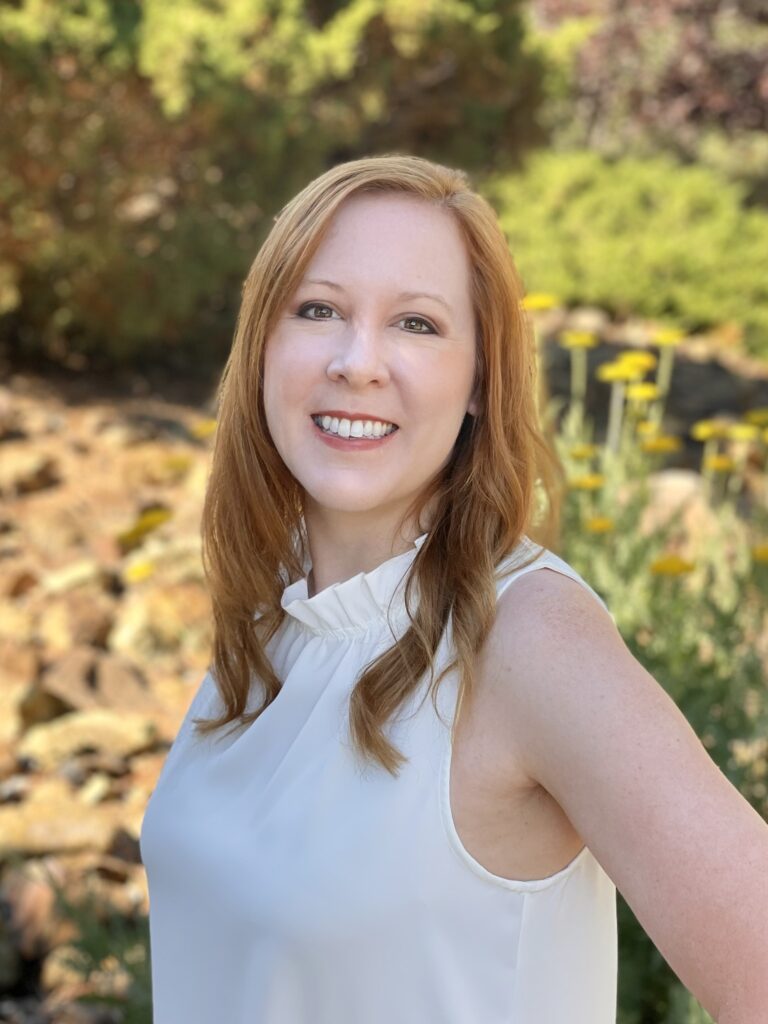
Guest Blog by Lindsey Larsen, OTD, OTR/L, ASDCS
lindseylarsen.otd@gmail.com
lindsey-larsen.com
disabilitybookweek.org
Lindsey earned her Doctorate in Occupational Therapy from Creighton University in 2007. She is a licensed and NBCOT-Certified Occupational Therapist as well as a Certified Autism Spectrum Disorder Clinical Specialist. She is currently an instructor for the School of Interdisciplinary Health Professions at Northern Illinois University. She also owns a small occupational therapy consulting practice to empower caregivers, educators, and healthcare providers with effective strategies to support children with developmental disabilities across all settings. Lindsey is also an award-winning and Amazon best-selling author, homeschool parent, military spouse, and executive director of the non-profit, Disability Book Week. For more information about Lindsey and her practice or book, please visit lindsey-larsen.com. To learn more about Disability Book Week, please visit Disabilitybookweek.org.